Why Ooih lives in your chat, not in another tab
The real cost of AI tools isn't the subscription — it's the context switch. Ooih eliminates it by living inside your team chat, not beside it.
Why Ooih lives in your chat, not in another tab
Every AI tool you've tried works the same way. You leave what you're doing, open a separate app, explain your situation from scratch, get an answer, copy it, go back, and paste it where it was needed. The AI is powerful. The workflow is broken.
Ooih doesn't work like that. It lives inside the conversation where your work actually happens — your Telegram chat, your group discussion, your team thread. It reads what's being said, understands the context, and acts without you having to explain anything twice.
This isn't a small UX improvement. It changes what's possible.
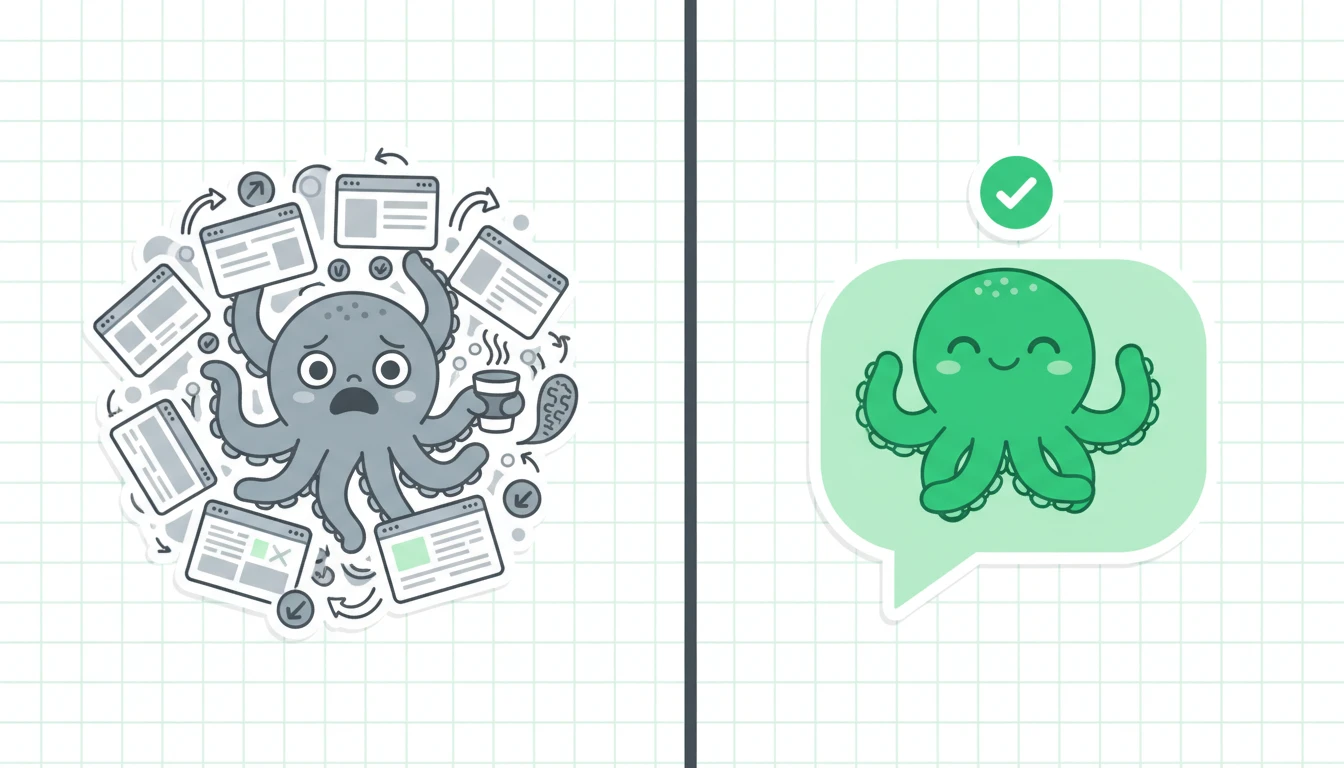
The hidden cost of "just ask ChatGPT"
You're in a group chat with your team. You've been going back and forth for twenty minutes about a marketing campaign — the target audience, the budget, what worked last quarter, what the competitor just launched. Someone says: "We should check what similar companies are spending on paid search in this segment."
Good idea. Now watch what actually happens:
- You open a new tab (or app)
- You try to summarize twenty minutes of discussion into a prompt
- You realize the AI doesn't know your company, your budget, your previous campaigns, or the competitor you're talking about
- You add more context — copy-paste from the chat, rephrase, clarify
- You get a response that's... fine. Generic. Missing the nuance of your actual situation
- You copy the useful parts
- You go back to the chat and paste them with an explanation of what you asked and why
Seven steps. You know that feeling when you cmd+tab back and forth six times to move one piece of information from one place to another? That's the real cost of "just ask AI." Not money. Not quality. Friction.
What zero-context-switch research looks like
Same scenario. Same team discussion. Same moment where someone needs market data.
You tag @oooih_bot in the chat. That's it.
Ooih has been reading the thread. It knows you're discussing paid search spend for a specific segment. It knows the competitor you mentioned three messages ago. It knows your company's context from previous conversations — the budget range, the channels you've tested, what your team considers "good" ROI.
It goes and finds what you need: recent benchmarks, competitor ad spend estimates, relevant case studies. Then it delivers the answer right in the thread, formatted for the conversation, referencing the specific points your team was debating.
No one left the chat. No one broke their train of thought. No one had to become a "prompt engineer" for five minutes to get a useful answer. The research just appeared where it was needed, when it was needed, with all the context already baked in.
The answer isn't necessarily better than what ChatGPT would give you with a perfect prompt. But you'd never write that perfect prompt — because writing it takes longer than the research itself.
From group discussion to live website
Here's a scenario that sounds impossible until you see it happen.
A small team is debating in their chat: what should the new landing page section say? What's the headline? Should the CTA be "Start free trial" or "Book a demo"? Someone shares a screenshot of a competitor's page. Someone else argues for a different layout. After thirty messages, they agree: new headline, new subtext, swap the button copy, add a testimonial block.
Traditional next steps: someone writes up the decision, creates a task, assigns it to a developer (or opens the CMS and struggles with the editor), schedules a review. The change goes live in three days if you're lucky. A week if you're not.
With Ooih: tag it after the discussion. It reads everything — the debate, the final decision, the screenshot reference, the specific wording people agreed on. It makes the changes to the actual website code. It deploys. The landing page is updated before the team moves on to the next topic.
The chat was the brief. The discussion was the spec. The decision was the trigger.
No ticket. No handoff. No "can you also change the..." follow-up email two days later because the brief didn't capture what was actually discussed.
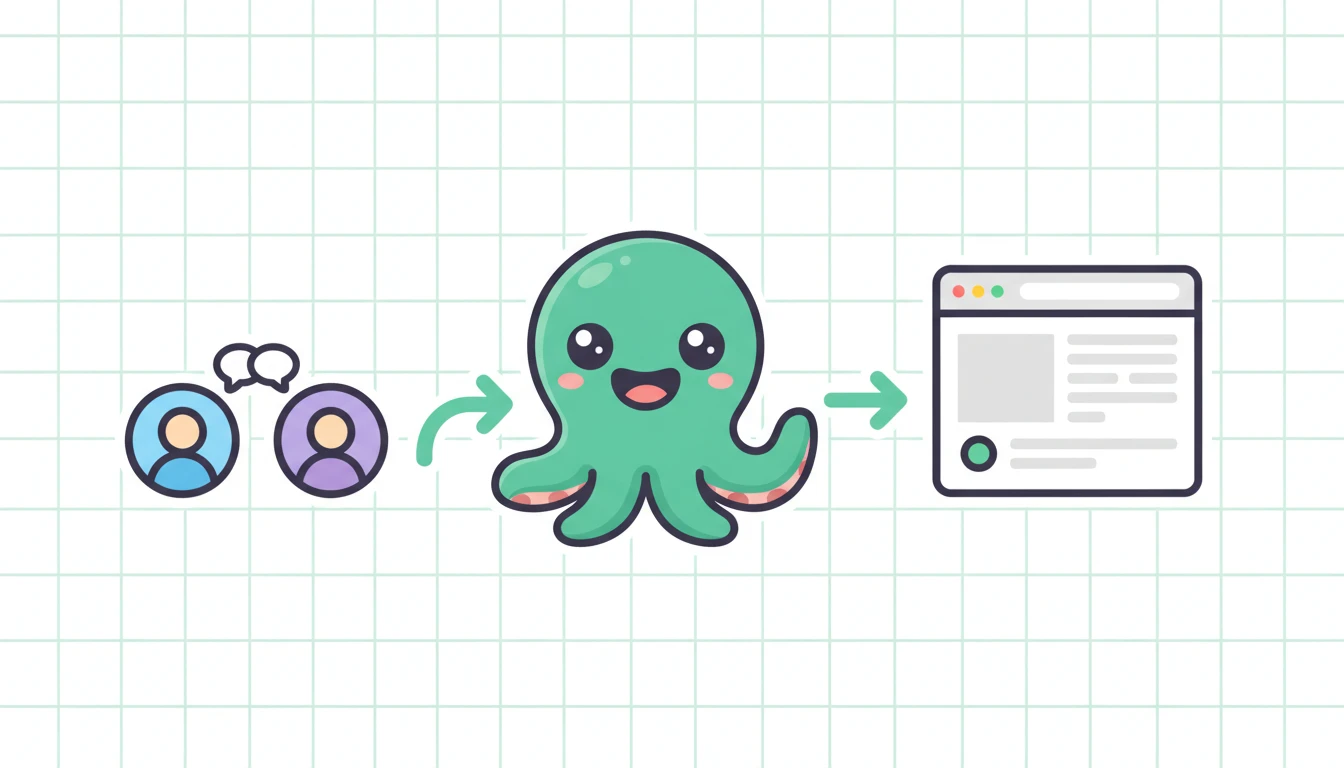
Why "inside your context" matters
Most AI tools are destinations. You go to them. You bring your context with you — manually, imperfectly, losing nuance with every copy-paste. Then you carry the answer back.
Ooih is not a destination. It's a participant. It sits in the same chat where decisions are made, where ideas are debated, where problems are identified. It accumulates context over time — your team's preferences, your company's constraints, your communication style, your approval workflows.
This means three things:
You stop translating. You never have to explain your situation to an AI. It already knows. The energy you'd spend crafting the perfect prompt goes into actual work instead.
Speed compounds. Every conversation makes Ooih more useful. It learns what "good" looks like for your team, what level of detail you expect, when to act autonomously and when to ask. The hundredth interaction is dramatically faster than the first.
The gap between decision and execution disappears. When your AI tool lives inside the same thread where decisions happen, there's no "implementation lag." The decision is the execution.
The interface is the chat
You don't need a new app. You don't need a dashboard. You don't need to learn prompt syntax or configure workflows.
You need the tool you already have open — the chat where your team already talks, plans, debates, and decides. Ooih just makes that chat capable of doing things no chat could do before.
One chat. Every task. No setup. $99/mo flat — start in Telegram.