ChatGPT in Telegram: Why a Bot Isn't Enough
A ChatGPT bot in Telegram answers questions but isn't part of a team. 5 limits a better model won't fix — and what works instead.
Hundreds of thousands of teams use ChatGPT in Telegram. Some through the official OpenAI bot, some through third-party proxy bots, some through custom integrations. The pattern is familiar: mention the bot in the chat, ask a question, get an answer. Fast, convenient.
But if you've tried to build a real team workflow around it — you've probably hit the same wall: the bot answers questions, but it doesn't work as part of the team. That's a fundamental distinction, and it doesn't go away by upgrading to GPT-4 or crafting a better prompt.
This article breaks down exactly why a ChatGPT bot in Telegram falls short for team work — and what specifically separates a "question-answering tool" from a "task-executing assistant." If you're still choosing how to bring AI into your chat, start with the 2026 overview of every option.
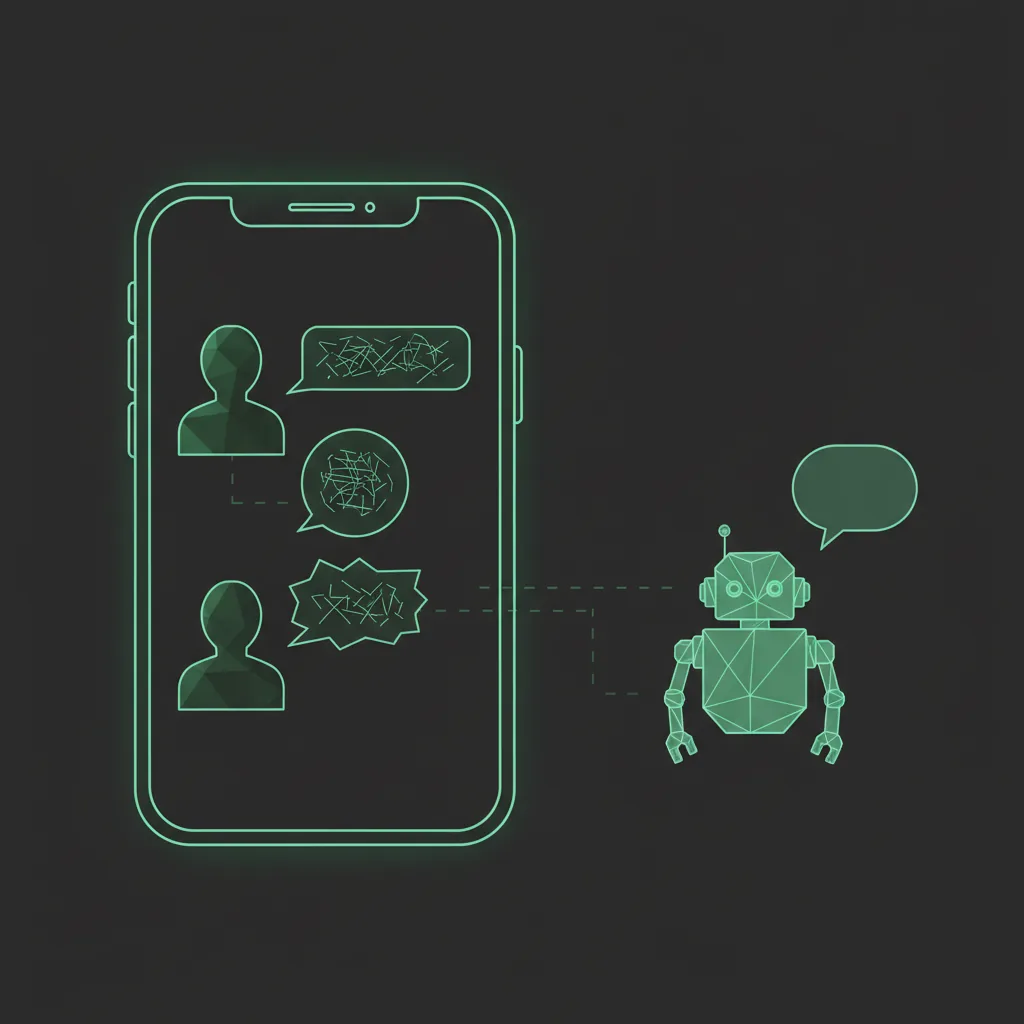
Problem 1: No Shared Team Context
The most fundamental issue: a ChatGPT bot doesn't know who you are or what your team does.
Every request is a conversation from a blank slate. The bot doesn't know your team is working on a product launch. Doesn't know you decided to change the positioning yesterday. Doesn't know that Kate handles content and Max handles sales. Doesn't know you already tried one approach and it didn't work.
Your team knows all of this — because you talk in a shared chat. But the ChatGPT bot is physically present in that chat, not contextually.
In practice: you ask the bot to "write an email to a potential client," it writes something generic. You explain: "we're B2B SaaS, client is a mid-size retailer, warm tone, no formality." It improves. An hour later a colleague asks the same — back to generic. Explain again. Again.
Context doesn't accumulate. Every time — from zero.
Problem 2: The Bot Answers, But Doesn't Do
ChatGPT is a brilliant text generator. It will answer a question, draft a document, explain a concept, translate a text. But in Telegram this is still just one step in a workflow.
What you still need to do:
- Copy the bot's output
- Open the right tool (Google Docs, CMS, email client)
- Paste and refine
- Publish or send manually
The bot can't open a task in Notion. Can't publish a blog post. Can't schedule a meeting. Can't send an email. Can't check task status.
This isn't a bug in ChatGPT — it's a fundamental limit of the question-answer architecture. The bot generates text, but isn't integrated into the team's actual workflows.
A real team AI assistant doesn't just answer the question — it takes the task to completion.
Problem 3: No Memory of Team Decisions
Teams make decisions. "We use this format for proposals." "All channel posts — conversational, not corporate." "Every piece of content needs manager sign-off before publishing."
A ChatGPT bot doesn't remember these decisions. Not an hour later, not a day later. Every time — a blank slate.
That means one of two things: either every request has to contain the full context ("write a post for our Telegram channel, we're a B2B agency, audience is marketers, tone is friendly, no formality, no long intros, no emoji except at the end..."), or the output will be off.
A good team AI assistant learns the rules the first time — and applies them automatically to every subsequent task.
Problem 4: No Role Awareness in the Team
In a real team, different people have different roles, responsibilities, and information scopes.
A ChatGPT bot in a group chat is the same for everyone: anyone can ask anything, there's no concept of "task assigned to this person," no task history by assignee, no way to say "Ooih, pass this to Max."
Teams don't need a neural network — they need an assistant that understands who in the team does what, and can work with that structure.
Problem 5: One Conversation — One Request
Team work isn't a series of isolated questions. It's a connected flow: discussion, decision, task, execution, result, feedback, next iteration.
ChatGPT in Telegram works well at the level of a single request. But when a task spans hours or days, when multiple people return to it, when understanding what was done yesterday matters — the bot is lost.
No task history. No thread to pick up three days later. No understanding that "this is a continuation of that task." Every new message is a separate conversation.
What's Really Missing: Team Context vs Solo Dialogue
To summarise: a ChatGPT bot in Telegram is a powerful tool for an individual who wants help with a specific task right now. It handles "help me" tasks well: translate this, explain this, draft this.
But team work requires something different — "help us":
- Know who we are and what we're working on
- Remember what we decided last week
- Know how we write and what we like
- Finish the work, not just reply
- Understand what's happening in the chat even when you're not directly addressed
That's the difference between a tool and a team member.
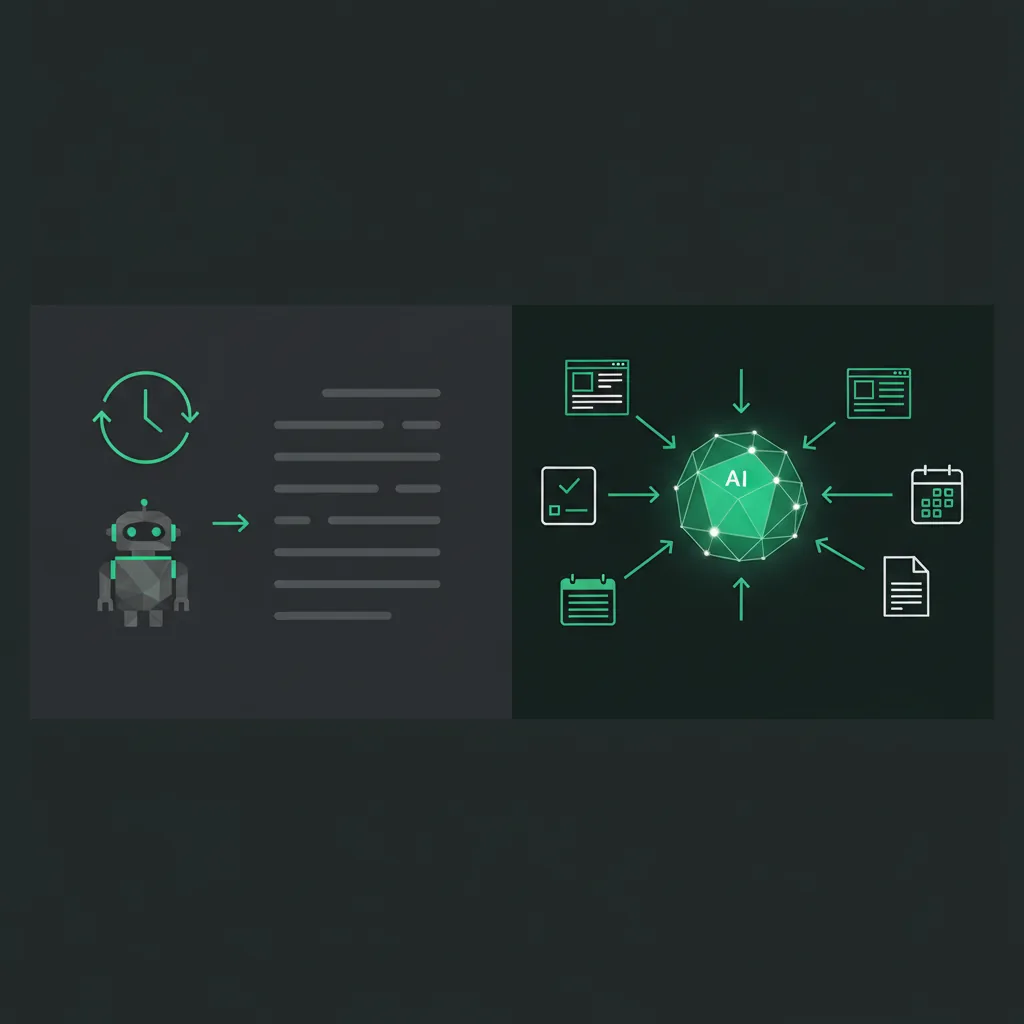
How a Team AI Assistant Works: Ooih as an Example
Ooih is built on a fundamentally different architecture. It's not just connected to the OpenAI API — it works inside the group chat as a participant who tracks context, accumulates memory of the team, and executes tasks rather than just answering questions.
Chat context: Ooih reads the actual messages in the group (with permission) and understands what's happening in the project — without you re-explaining the background every time.
Long-term memory: The "get sign-off before publishing" rule is explained once — and Ooih applies it to every subsequent task. The style the team prefers is learned from the first few tasks.
Task execution: Ooih doesn't just write text — it can publish an article to the blog, format a task, prepare a document for a meeting. The difference between "reply" and "do."
Team dynamics: Ooih understands the flow of conversation — who said what, what task is on the table, who should handle it.
Case: how the ChronoShop team went from 3-4 hours per content post to automatic publishing from a single Telegram photo. Ooih learned their process over the first few tasks — no documentation, no setup.
Three Signs Your Team Needs a Real AI Assistant (Not a Bot)
If any of these describes your team — it's time to move from a bot to an assistant:
1. You re-explain context every time. Every ChatGPT request starts with the same background: who we are, what we do, how we write. That's not a problem with the model — it's a problem with the absence of memory.
2. You only use AI for drafts, even though you want more. "Got a draft — did the rest myself" became the norm not because it's the right approach, but because the bot can't do "the rest." If a task has multiple steps, you handle some manually by default.
3. Team members use AI differently, with no shared process. Some use bots actively, some never opened one. No shared context, no task history, no accumulated rules. AI in the team is a personal tool, not a team tool.
The Hidden Cost of Bot-Based AI for Teams
It's worth thinking about what bot-based AI actually costs — not in subscription fees, but in time.
Every time someone re-explains context: 2–3 minutes. Five teammates, ten times a day: nearly an hour of lost time daily just repeating background that a real team assistant would already know.
Every time someone manually completes what the bot started: 5–15 minutes per task. For a team doing ten AI-assisted tasks a day, that's hours of bridge work between "what the bot produced" and "what we actually needed."
None of this shows up on an invoice. But it adds up to a significant tax on every team that uses AI as a solo tool in a group setting.
When a ChatGPT Bot Is Enough
Honestly: a ChatGPT bot in Telegram works well for specific scenarios:
- Quick text translation or term explanation
- A one-off draft you'll refine yourself
- Personal use — when it's just your conversation with AI
- Ad-hoc questions that don't require team context
If that's what you need — the bot works fine.
When You Need a Team AI Assistant
You need a team AI when:
- Tasks recur and explaining context every time costs real hours
- The team has established rules, voice, processes — AI should know them
- The output needs to be a completed task, not a text in the chat
- Multiple people work with AI — and none of them should have to re-explain the context
If that sounds like your situation — see what Ooih does inside a team chat, read real team stories, or check pricing.
7-day free trial, no card required. Add it to your Telegram group and try it on a real task.
One chat. Every task. No setup — start in Telegram